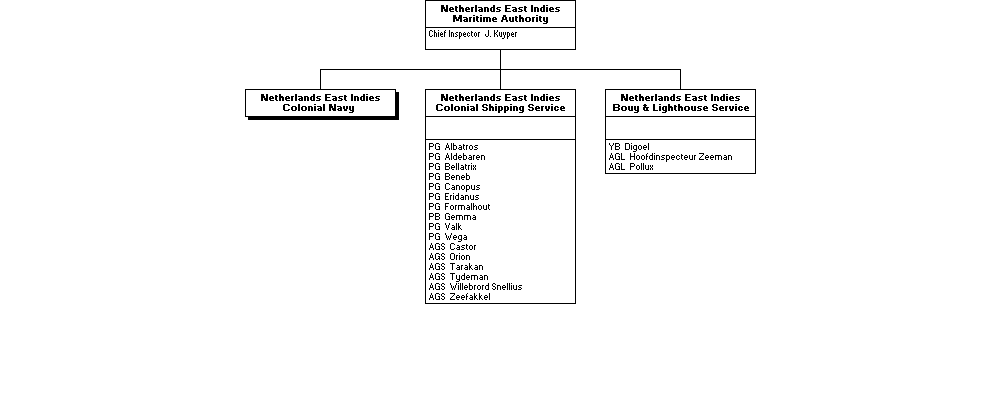
Maritime Authority Dienst der Scheepvaart
The Maritime Authority was owned and run by the NEI Colonial Government and
was the umbrella organization for all government shipping.
Besides the warships of the Colonial Navy, the vessels consisted of
a variety of small patrol boats, survey ships, light house tenders, etc.
for local customs, police work, and other maritime administrative duties;
for the mapping of the Netherlands Indies waterways, seas, and it's countless bays;
and to prevent smuggling, slavery and piracy.
The Maritime Authority also transported
small amounts of cargo and persons over short distances within the archipelago,
(larger tasks were carried out by the ships of the KPM ).
It consisted of three parts:
— The colony's navy (Gemilitariseerde Gouvernementsmarine)
— The colony's shipping service (Dienst der Gewestelijke Vaartuigen)
— The Buoy & Lighthouse Service (Dienst der Bebakening en Kustverlichting)
The three services did not keep their ships completely separate and the ships
served where needed. The Dienst der Scheepvaart had been militarized in
September 1939. Ships acted under Navy control although maintaining their civilian
crews. They supported the Zeemacht Nederlands-Indie (the all-encompassing NEI Naval
Command) and patroled the numerous seaways within the archipelago. Some ships were
completely taken into naval service. With a few modifications, the Rigel was
made suitable for laying mines. Five ships were converted to flying boat tenders
(Sirius, Fazant II, Reiger, Arend and Poolster),
and Castor into a repair ship.
The Poolster later served as a tender for torpdo boats.
The Zuiderkruis had already been converted to a submarine tender
during 1937–1939.